
Dear you:
I’m done
All through;
Soon gone.
And when
I’ve died
Pray then
Provide
My due:
Coins two
(One for
Each eye)
My fare
to buy.

Dear you:
I’m done
All through;
Soon gone.
And when
I’ve died
Pray then
Provide
My due:
Coins two
(One for
Each eye)
My fare
to buy.
Εὐρύλοχος:
… and said, “Trust me so all ends well!”
So we prepared to follow, yet again, Himself.
Turned out he was no wiser head, who, wanting but support,
Would steer us safely through the strait.
We hesitated once, though, I recall
And might have done any of three things, then:
The first thing, or the second one,
Or else what finally we did, which now
At least we can rule out
As an effective plan.
We could have fled; we could have gone
A longer way around; or else we could have done
What, as I said, we did, which was
To follow orders, rise above,
Pull oars, and carry on —
Only to see our shipmates, one by one,
Grabbed up and gobbled as their ship raced on.
Now, our surviving few starved and marooned,
Captain Nobody having gone off to commune
With some god or another, what’s there to be done?
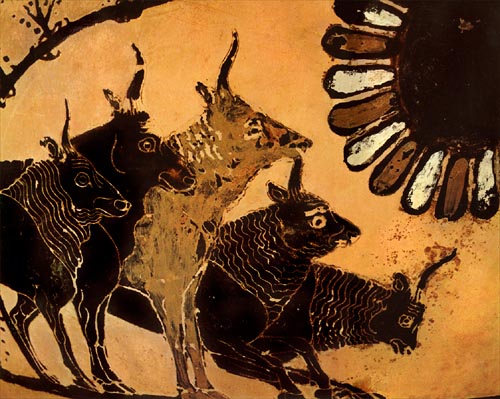
Meantime these farting cattle, said to be the Sun’s,
Grow fat as we grow leaner. I say, Come!
Has any sign we’ve had yet been this clear?
Men live on beef, not prayers.
Then let us do what’s clearly to be done.
***
Their Captain slumbering in the hills, his men
Put flint to iron, steak knives to the hone;
Meanwhile the gods, as ever fanciful and grim,
Brush up on animating carrion,
Seeing (they always see) what’s to be done.

Word-whip went under world-hearth
Worm-pullers gave turf-warnings
Traveled he the truck-river
Till body-boats grew blistered
Yeast-sweat he yearned for
Work-markers sore missed.
Free translation:
The poet went out on a sunny day.
Birds were singing.
He walked down the street
Until his feet were sore.
He wanted a beer,
But had no money.
Blame NaPoWriMo.net, whence I was urged to write “a kenning poem. Kennings were riddle-like metaphors used in the Norse sagas; basically, ways of calling something not by its actual name, but by a sort of off-kilter description.”
Image: Beer Cap, by Jim Titulaer, published under a Creative Commons Attribution-ShareAlike 2.0 Generic (CC BY-SA 2.0) license.
 We didn’t talk funny once upon a time
The way the kids do now
We spoke in even meter, perfect rhyme,
Made sense to sentence bow.
We knew a careless word might be the bell
That rang a god awake –
To what end, none could ever quite foretell;
A chance, then, not to take.
But careless we grew
and after a time, unsure what to do
or say, how, or to who
And latterly the language is grown askew.
And now, look. The gods awoke, all right,
and drank and danced and sang.
The gods went out, stayed out all night
wouldn’t go back from whence they came.
They’re out carousing now no doubt.
Oh hell, oh where’ve they gone?
And what have we to say for ourselves
anymore? Nothing, and more
nothing, the Devil’s taken the words,
Oh what were we talking about again?
Oh when did we lose track?
It’s too late to take care,
We’ve gained something
and we can’t get it back.
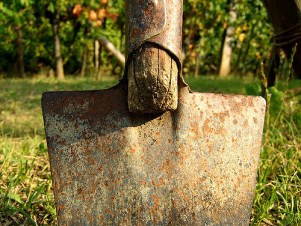
In the back yard the girl is digging a hole
to China, while in the lavender the bees mutter
in anticipation and in the tree red winged blackbirds
flash their epaulets. The girl strikes gold!
The bees hum out the news, the blackbirds flutter
semaphore. Now for the hose, the hole wants to become a lake.
Did mother call? The birds, the bees, the girl pretend they haven’t heard.
Doesn’t she know about digging holes? Some tasks can’t wait.
Future, in general: passim
Future, auguries of: see Past, future of; Past, memories of; Dreams, in general; Nightmares, in general
Future, fear of: passim
Future, grammatical tense: see Language, limitations of
Future, history of: see Past, in general; Past, future of; Present, in general; Present, history of
Future, inevitability of: see Future, inevitability of
Future, longing for: see Past, limitations of; Present, limitations of; Future, memories of
Future, memories of: see Memory, memories of the future
see also: Dreams, memory and; Dreams, nightmares and
see also: Memory; Memory, dreams and; Memory, transitive property of
see also: Nightmares, in general
see also: Past, predictions about; Past, resemblances to the future
Future, mutability of: passim
Future, resemblance to the past: see Future, inevitability of
see also: Language, limitations of
see also: Past, resemblance to the future
see also: Present, limitations of
Future, visitors from the: see Memory
Future, what I make of: see Future, fear of; Future, longing for; Future, resemblance to the past
Future, what it’s for: see Future, longing for; Language, limitations of

Use me
Use me
Never let me go
Hold still
After the kiss
After the kiss
Hold still
Breath, eyes, memory
Perfect
Perfect
Perfect
Perfect
And then things fall apart.
The hours
Counting backwards
Shatter me
And then things fall apart
Breath, eyes, memory
Strain
And then things fall apart
Never let me go
Where she went
After the kiss
After the kiss
Hold still
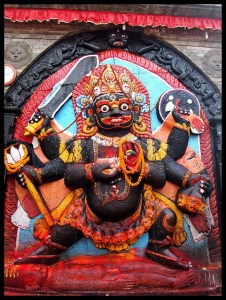
I dreamed the streets of Katmandu
Were full of flowers
As the earth-mother mountains
Were shrugging off their glaciers
While a sea rose up somewhere
And vultures dreamed of feasts
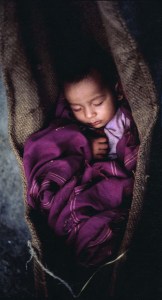
But a young woman smiled and said
Nothing’s too much to bear
And sure enough she had sung
Her child to sleep
And the streets of Katmandu
Were full of flowers.

The birds gave autumn up for dead
But made a song before they fled
Here are the words they sang and said:
Oh, no, it’s the end of the world!
Oh, no, it’s the end of the world!
Oh, no, it’s the end of the world!
Let’s scatter the nests and fly away!
The frogs have sunk and turned to stone
The seeds are sleeping, each alone,
The rest of the world may do as it pleases
When we are gone, gone, gone, gone.
But Spring hatched from December’s nut;
The grass turned green and the ram sprang up;
The birds returned from where they’d flown
Acting as if they’d always known;
The frogs from their stony sleep uncurled
And the birds made song for the beginning of the world.
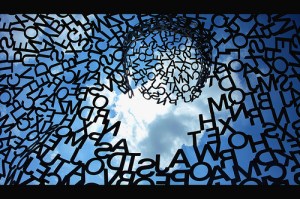
We were all pretty sure the sky was blue
Though no one would put it in writing
And take the risk of one day being proved wrong.
Was it so wrong not to tempt fate? So wrong
To wriggle off the hook, and not risk feeling blue
At later, maybe, having to waste time righting
A wrong easily avoidable by just not writing
Anything? It was all right, then, not to write, right? Wrong:
We had a chance to take a stand — a chance we blew:
To say, Blue; or, Not blue; be right, or wrong; and nothing riding on it.
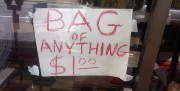
 Bag of Anything