
If something comes
I swear I’ll hear the sound.
But then what? Can I run?
A dream will hunt me down.
If something comes
I swear I’ll hear the sound.
But then what? Can I run?
A dream will hunt me down.
 Who once feared dying loves the done deed, death:
the body purged of breath,
relieved of the uncertainty of what comes next,
relieved of the need to expect.

Fear dreams, and sleep makes dreaming real.
I do not like to rest. I stay up late.
From the inchoate room sleep builds, where syntax fails,
I know one day I’ll find I cannot wake.
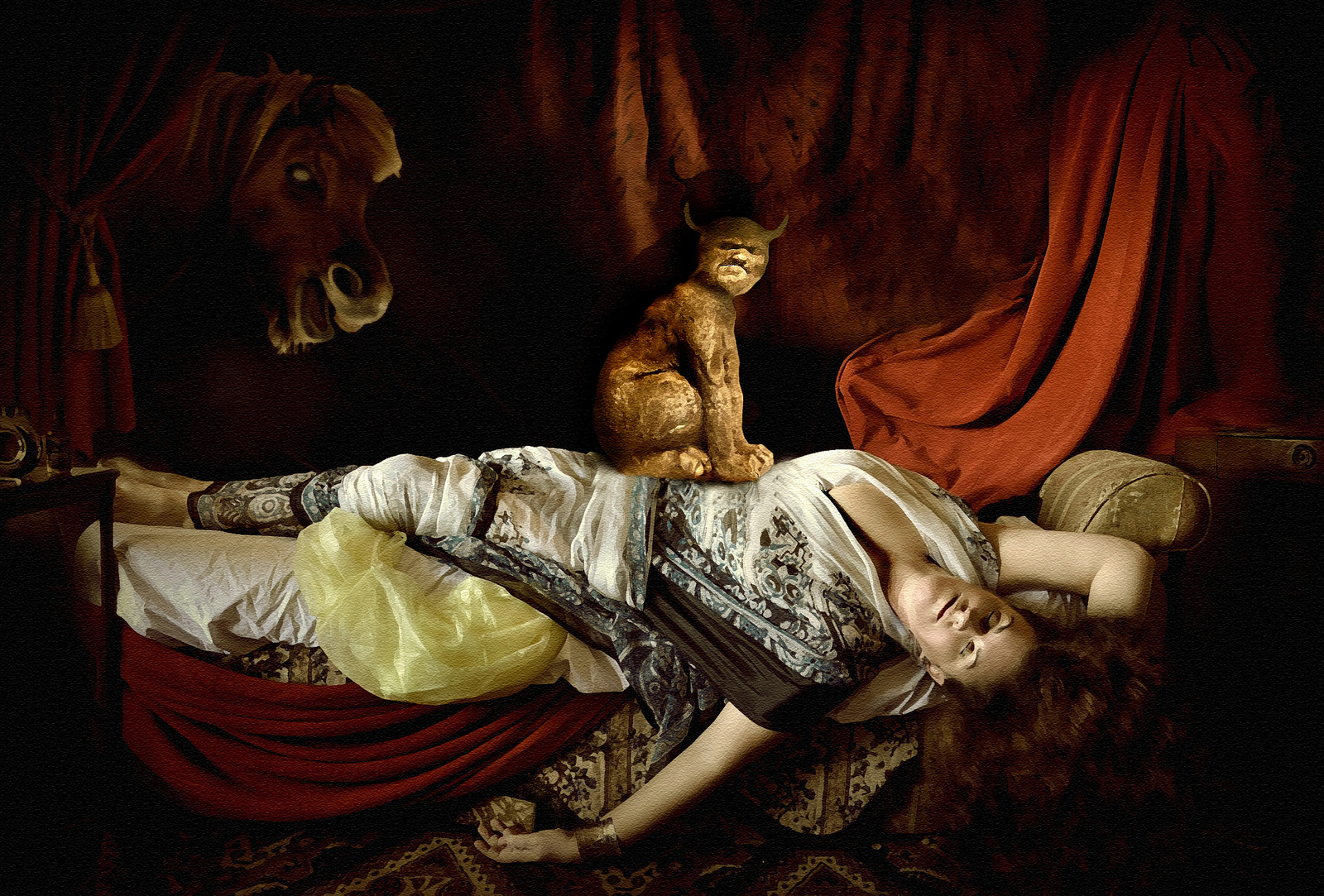
Beast hallucinations claw my face
from inside, seeing now’s their chance:
the gate of sleep begun to swing, the beckoning escape.
Dreaming, dreaming makes them, makes them dance.
 O does your living make no sound?
The world is large for you to see.
They fly who never touch the ground.
The dream shall pass: it was a dream.
What are the words I have not learned?
I stand before you clean, too clean.
The world has turned before, and turns;
I am unmoved, but fly in dreams.
 Most get an afterlife that isn’t much
for having had one’s soul pried out and kissed by death.
Oh, yes, it’s heady for a while, everyone suddenly
so sympathetic to one’s finished life,
so seeking lessons from one’s progress, or
so plucking-out-the-moral from one’s last decline.
It’s not bad while it lasts,
and everyone makes nice, but honestly
it’s mostly straight from gravestones and condolence cards:
“Beloved mother, Loving wife,” and how
she loved her kids, her husband, animals,
was pleasant always, liked to dance…
Most dead folk get that taste of it.
But later, after the tepid food and drives back home,
after some hours or months of reminisce,
one’s absences become less notable; one starts to fade.
And then what’s left of one? A nice obit, scrapbooked;
a stray memorial card stuck in a dresser drawer somewhere.
But this!
If there’s a heaven, oh! She’s gloating there for sure,
knowing she’s in it for the long haul now;
the mortification of her outraged privacy
is nothing to such pride! Such an I-knew-it!
Her own death, the source of his triumph!
 David and Anne are playing chess.
The game of kings.
David’s thinking tactically,
While Anne’s mind is on other things.
Anne plays White, but loses ground
In the center, and her concentration wanes.
Outside the room, the easy darkness
Presses at the window-panes —
She softly gazes out at it
As David launches his attack.
“Your move,” he says, and jars her back
Into the minding of the game;
She had been wondering at the way
The darkness called her name.

So when they continued asking him, he lifted up himself, and said unto them, He that is without sin among you, let him first cast a stone at her.
John 8:7
Deplore cast stones? Sinner, avoid the righteous;
Likely they are spoiling for a fight. Just
Follow Jesus’ counsel: in a throng, us
Common folk are safer with the wrongeous.
And let it go. No poet nor no painter you;
Yet that was something only you could do,
Let go and yet not lose,
And sniffing shuffle on on quiet feet
To go and shovel out the ashes from the stove
And put the whistling-kettle on for tea.
 Around this time, Ginsberg also had what he referred to as his “Blake vision,” an auditory hallucination of William Blake reading his poems “Ah Sunflower,” “The Sick Rose,” and “Little Girl Lost.”
So tell me this one thing,
Old poet, mad saint,
What will it take to make the world strike me with its great magic?
 Bag of Anything