Post-Script (Anno 1945)

(by Mascha Kaléko; translated from the German)
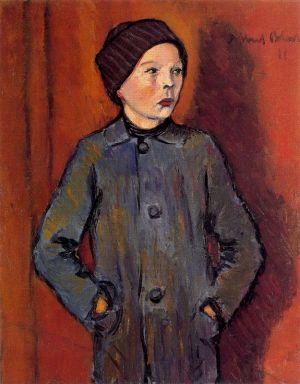
Bloch_portrait-of-a-boy
I’ve traveled far in thirteen years –
Although what I looked for was hardly romantic;
But without any taste for new frontiers
Still I seem to have crossed the Atlantic.

All that I had, I’ve left behind
But the moment I look around, I find
I’ve a child like the one my parents knew:
His parents are immigrants, through and through.

My son writes “ALIEN” – learning to spell.
He tells me, “Don’t speak German, dear.”
He’s eight. He wants to know, as well,
Is it “all right” not to be from here?

Just what I once asked Rector May!
And like me, too, in another way:
For he’s sure that peace will come to stay
Once the stupid War has gone away.
Continue reading

Interview with Myself (Anno 1932)

(by Mascha Kaléko; translated from the German)

csm_Foto_5_02_1765303feb

In the talkative town where I made my debut
My parents were immigrants, through and through.
We had a church, a doctor or two,
And a loony bin with a lovely view.

My favorite word as a child was “NO.”
If I made Mother happy, it didn’t show.
And thinking back to that long-ago
I wouldn’t wish my own child so.

The Great War found me under the sway
Of the parish school and Rector May,
And thinking that peace would come to stay
If only the War would go away.

Well, I entered the academic race
And the teachers were pleased at my rapid pace –
Despite my having not a trace
Of Nordic hair or an Aryan face –

At graduation, Teacher said
We were all so smart, and so well-bred,
We could go forth, work hard, get ahead.
But I took an office job instead.

I work eight hours of every day
And my duties are light, but so’s my pay;
And at night I while the time away
With poetry – to Dad’s dismay.

I love to brave the wilderness
Of maps, and wander, bodiless;
Still there are days, I must confess
I sometimes wish for happiness.

Continue reading

That Old Feeling

(by Mascha Kaléko; translated from the German) 

Erich Heckel, Still Life with Wooden Figure, 1913The first time that I thought to die
–I still recall the scene–
I died with so much skill and grace
In Hamburg, just the perfect place,
And I was just eighteen.

And when I died the second time,
It filled my heart with woe
That I could leave you nothing more
Than just my heart, laid at your door,
And footprints, red in snow.

And when I died the third time,
I hardly felt the pain;
Familiar as my toast and tea,
Like an old shoe, is death to me.
I needn’t die again.

Continue reading

Kaddish

(by Mascha Kaléko; translated from the German)

Red shriek the poppies in the green fields of Poland.
Death lies in wait in the black forests of Poland.
Wheat rots, unharvested.
The reapers are all dead.
However much their mothers starve
The children cry for bread.

And frightened from their nests, the birds have ceased
To sing; the trees lift up their limbs for grief
And bow and whisper lamentation towards the east;
And when the wind takes up their sorrows like a prayer
And when they bow down like old Jews in attitudes of prayer
The broad, blood-sodden earth is shaken,
The stones themselves awaken.

This year, who will sound
The Shofar for the supplicants beneath the ground?
The hundred thousands whom no headstones name,
The hundred thousands God alone can name.

How shall they be entered into Heaven’s book aright?
Lord, we beseech you,
Let the prayers of the trees reach you
Tonight, as we light the last light.

Continue reading

Still awake

3853566155_771f35d751_bThat time you lay with me
and the moon so bright

we doubted our own eyes: springtime,
and silver frost on the ground!

Like a blow, your absence.
I look for you under the bright moon
in the springtime

but the moon sinks. You are absent.

That’s why.


Continue reading

From this height one sees everything

(after Li Po)
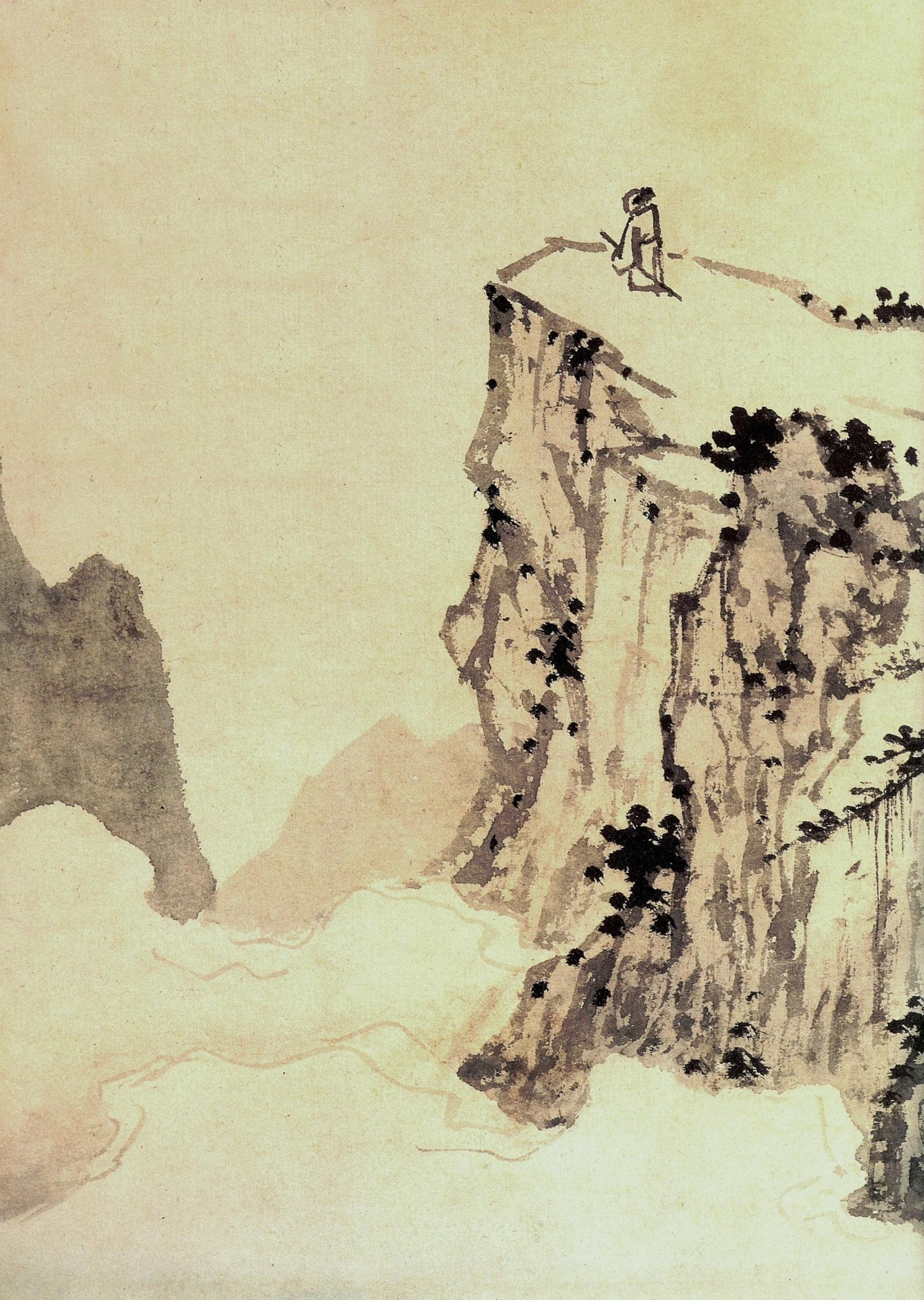
shen_zhou_poet_on_a_mountaintop_detailnelson-atkins_museum__kansas_city-142BA83F64C7B20B641

A younger me would have stood on his head
To prove the earth and sky are of a size
Then seeing beneath his feet the sunlit clouds
Strode off upon that opalescent path.

These days the sun has turned her face from me.
The autumn wind flings tiny knives of frost.
Far down below, the slow east river flows
Beset with whitecaps, fishing boats, and gulls.

Yes, younger, I’d have turned things upside-down:
The sparrows and the swallows at their nests,
The small birds perched among the date tree’s thorns,
All would have stopped, and quirked their heads to see!

But these days I’m no gymnast, me.
Sundown, I’ll sling my sword upon my back;
I’ll set my feet upon the dusty road
And head off down the mountain, muttering of home.

Continue reading

I gazed into my wine cup

(After Li Po)

2860756974_0311bccec2_b

I gazed into my wine cup
Till after darkness fell.

Out of that dark pool
The vines grew up
Twining me around
And the wine was in me
And I was the wine.

Then I dreamed I stood,
Lost in the wine’s dreaming,
And the moon was there
Beneath my feet, there
Where I walked, midstream.

Somewhere an owl hooted

But nobody was there
To wake me.

44k216f

Continue reading

Visiting the Taoist Priest Dai Tianshan, but Not Finding Him

(after Li Po)

216569522_0cd3b11fca_o

I heard his dog barking down by the creek, but when I tried to follow
A hard rain fell, scattering the peach blossoms, hiding the path.

I’ve long since lost the dog, the creek, the path; I can’t hear the temple bell,
And one stand of bamboo is like any other.
I think it’s spring now, or will be soon: it’s greener, anyhow,
And sometimes I see deer, off in the woods.

No one else can tell you the right way to go, that’s what he always said;
Meaning, I thought: Trust yourself. See where that’s got me?


Continue reading

The Panther

4434065127_1cb2f10b2b_o

From so much eyeing of these bars
The panther’s gone cage-blind
So that it sees a thousand bars,
And not the world behind.

Lithely padding, circling
In movement without cease
It coils its body like a spring
That cannot find release.

And sometimes on its eye within,
The silent pictures start–
That rush through sinew, nerve and skin,
But vanish at the heart.

 __________________________________

Rilke drew me in again; I’m not quite sure why. His lyricism? His romanticism? This particular poem’s fusion of imagism and philosophizing that, though it stops well short of banality, is certainly situated somewhere along the obviousness spectrum? Likely enough it was over-exposure to the slavish word-bound accuracy of over-respectful translators who run roughshod over sense and sensibility to turn–for example–this:

Sein Blick ist von Vorübergehen der Stäbe
so müd geworden, daß er nichts mehr hält. (Ranier Maria Rilke)

into this: Continue reading

In Memoriam (two translations from the English)

Dear reader, I’m curious: of the versions below, which do you prefer (if either), and why?

3079020212_8fb47a5326_b

I.

They built a grand monument to the dead
And the place where the stone was quarried
Soon filled up with rainwater
And the young couples would meet there.

II.

Built to commemorate the dead
This palace stands, untenanted.

By the still pool in the quarry pit
The lovers sometimes come to sit.


Continue reading