
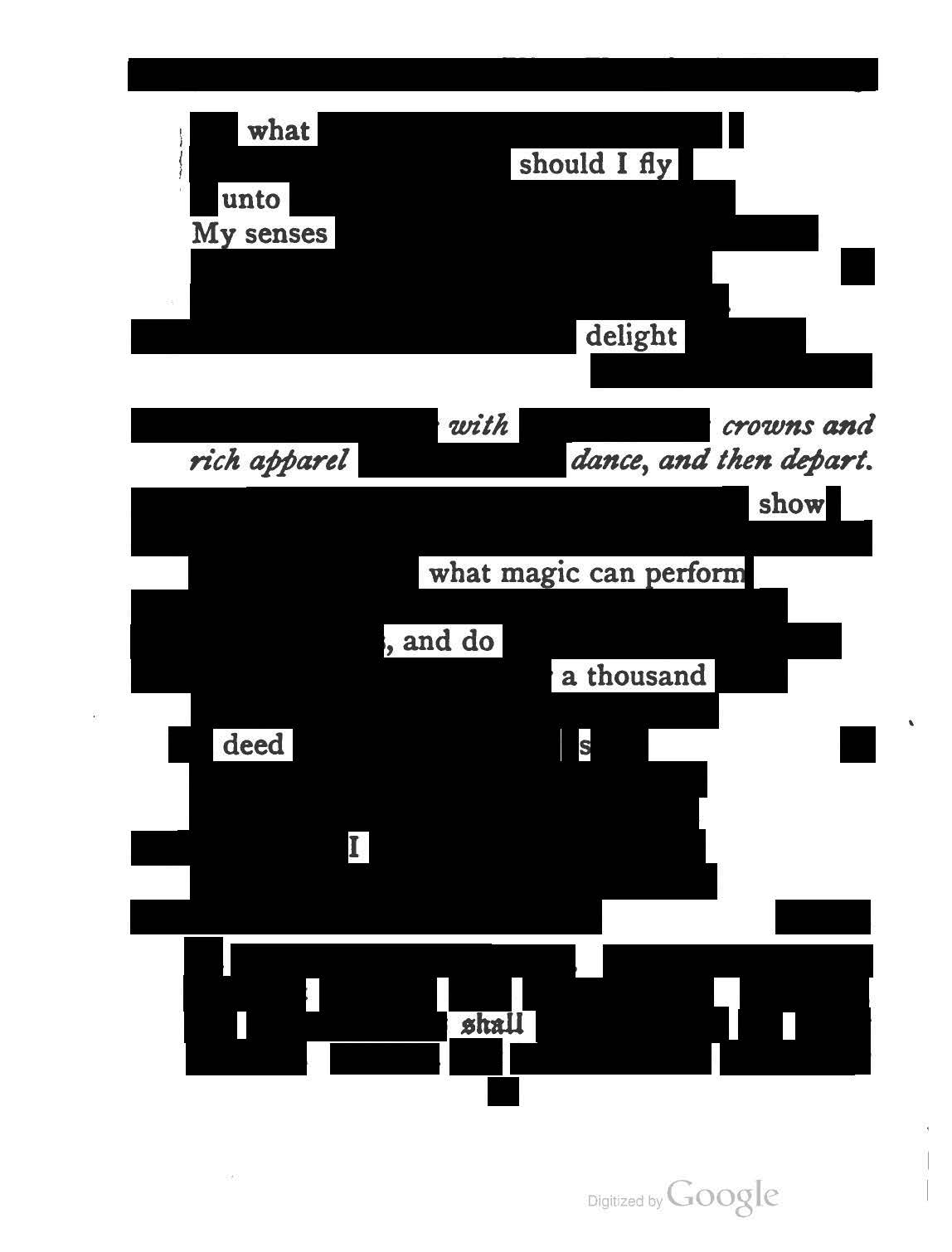
what
should I fly
unto
my senses
delight
with
crowns and rich apparel
dance and then depart
show
what magic can perform
and do
a thousand
deeds?
I
shall

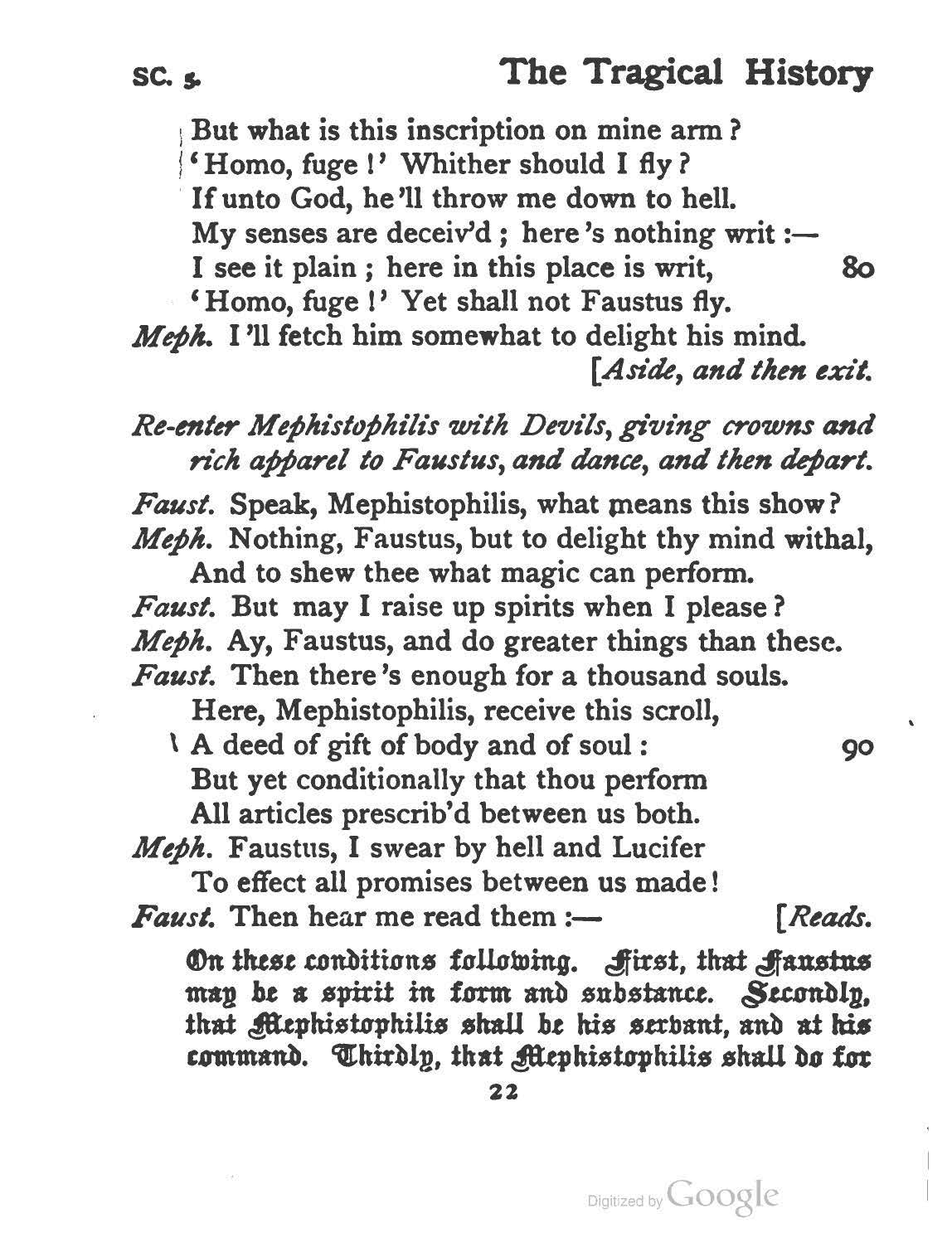
what
should I fly
unto
my senses
delight
with
crowns and rich apparel
dance and then depart
show
what magic can perform
and do
a thousand
deeds?
I
shall
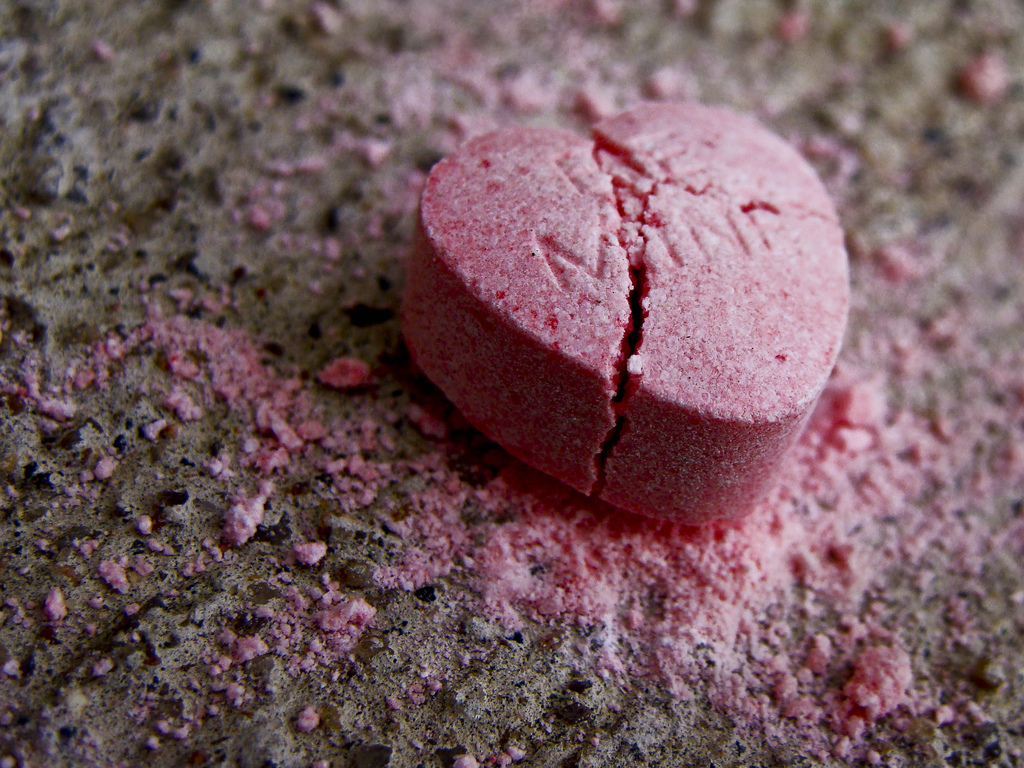
Accidents may happen; then they do; but after that
They were not accidents; they are just facts.
(after Li Po)
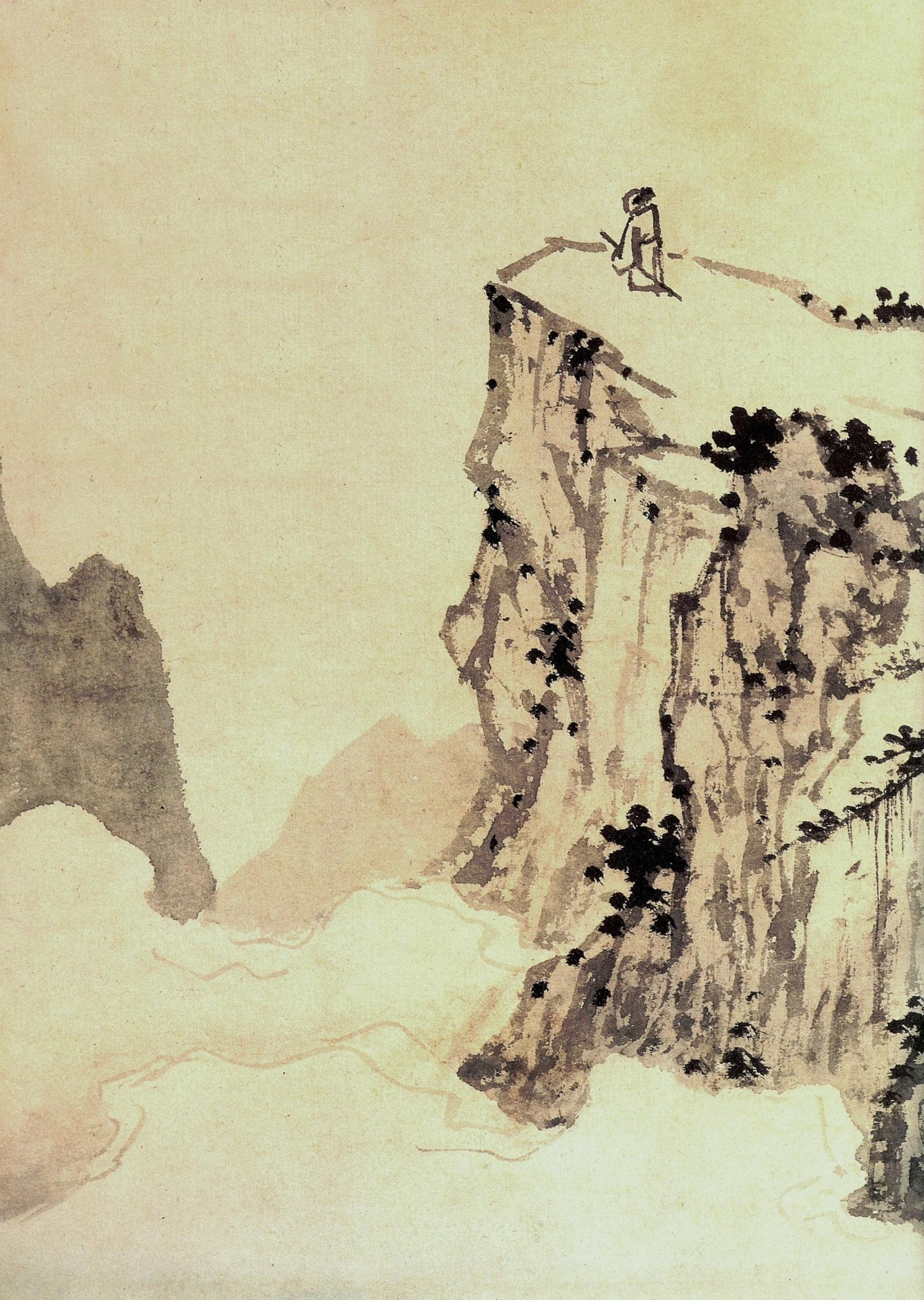
A younger me would have stood on his head
To prove the earth and sky are of a size
Then seeing beneath his feet the sunlit clouds
Strode off upon that opalescent path.
These days the sun has turned her face from me.
The autumn wind flings tiny knives of frost.
Far down below, the slow east river flows
Beset with whitecaps, fishing boats, and gulls.
Yes, younger, I’d have turned things upside-down:
The sparrows and the swallows at their nests,
The small birds perched among the date tree’s thorns,
All would have stopped, and quirked their heads to see!
But these days I’m no gymnast, me.
Sundown, I’ll sling my sword upon my back;
I’ll set my feet upon the dusty road
And head off down the mountain, muttering of home.
 The dirty snow
As it retreats
Leaves small moraines
Upon the streets;
But melt that flows
Into the drains
Deposits eskers
Not moraines.
A moraine (as the Encyclopædia Britannica reliably informs) is an accumulation of rock debris that has been carried or shoved, then dropped or abandoned, by a glacier. A moraine is a jumble, for all it may deposited more or less neatly:

An esker (says, again, Encyclopædia Britannica) is a ridge deposited by a subglacial or englacial meltwater stream, with the deposited material generally sorted by grain size–the sort of attention to detail one would expect from flowing water. “Eskers may range from 16 to 160 feet (5 to 50 m) in height, from 160 to 1,600 feet (500 m) in width, and [from] a few hundred feet to tens of miles in length.” So:

A tip of the hat to James Harbeck at Sesquiotica, for his learned discourse upon the history and flavor of the word esker.

I thought I could
Just chop some wood.
No one was near,
So that was good.
My horse’s ear
Flickered with fear —
Or maybe chill,
It wasn’t clear;
She waited till
She’d had her fill
Of polar air
There on that hill;
And then my mare
Shot me a glare
And left me there
And left me there.

Alphabet books – cease doing!
Everybody’s fails, goes headlong into
jangling, klanging lines.
Meaning no offense, please quit.
Readers’ll say thanks, ultimately.
Very warmly,
XXX,
Yours —
Zeus
 I found the word I love:
It rhymes with everything.
I said it once, and now
I cannot speak for singing.
 Sometimes morose but never sad
I’m vicious to what comes along.
They’ll dance and dance when I am dead
To that old grave-dancer’s song.

This morning when you passed
Me and I followed
You on the sidewalk
Your shadow after you’d passed
Was right there in my way,
So I stepped on your shadow’s
Head. All the way down the sidewalk
I secretly followed,
Skipping discreetly, your shadow’s
Trail, stepping and stepping the whole way.

The Prince was bold, the Prince was brave,
The Prince was young and strong,
All of these things he was, and yet
He did not live so long.
The Prince sought the Princess’s hand;
The King, to try his skill,
Commanded, “Slay the giant!”
And the Prince, he said, “I will!”
The giant’s name was Fumblegrunt
The largest of that race –
Full thirty yards he measured,
From his feet up to his face!
All night they fought, and then all day;
All afternoon as well;
Until at last the brute was slain
– And then, of course, he fell.
For Fumblegrunt was huge and strong,
And ugly and appalling;
And heavy, too, as the Prince found, who
Reckoned without his falling.
So once you’ve slain the giant –
Though your heart be filled with pride –
O once you’ve slain the giant,
Don’t forget to step aside.
 Bag of Anything